

Introduction
Dubai metro zones help determine the fare for a journey. RTA divides the wider public transport fare area into seven zones, and the amount depends on the zones covered and the ticket or card you use. A station count alone is not a reliable way to calculate the price.
Start with the two stations on your route and locate them on the current RTA map. Then check the fare band: one zone, two adjacent zones, or more than two zones. This also helps you choose a suitable travel pass if you repeat the same journey most days.
Find the zones on the current map
Open RTA’s metro station map and use the latest official map or brochure offered there. For a Dubai metro map PDF, follow the download from the official page rather than keeping an undated search image. Station branding and future project markings can change between versions.
Locate your start, destination and any interchange before counting fare zones. You may pass several stations inside one zone or cross a boundary during a short ride. Read the zone markings separately from the coloured rail lines; line colours show where trains run, while zones are used for fares.
For a trip to Dubai Mall, use the official Burj Khalifa/Dubai Mall station name, R25. For the southern network, the DIP station guide explains Dubai Investment Park, R74. Finding the correct station first prevents a fare calculation based on a similarly named district or destination.
Single-journey fares by card
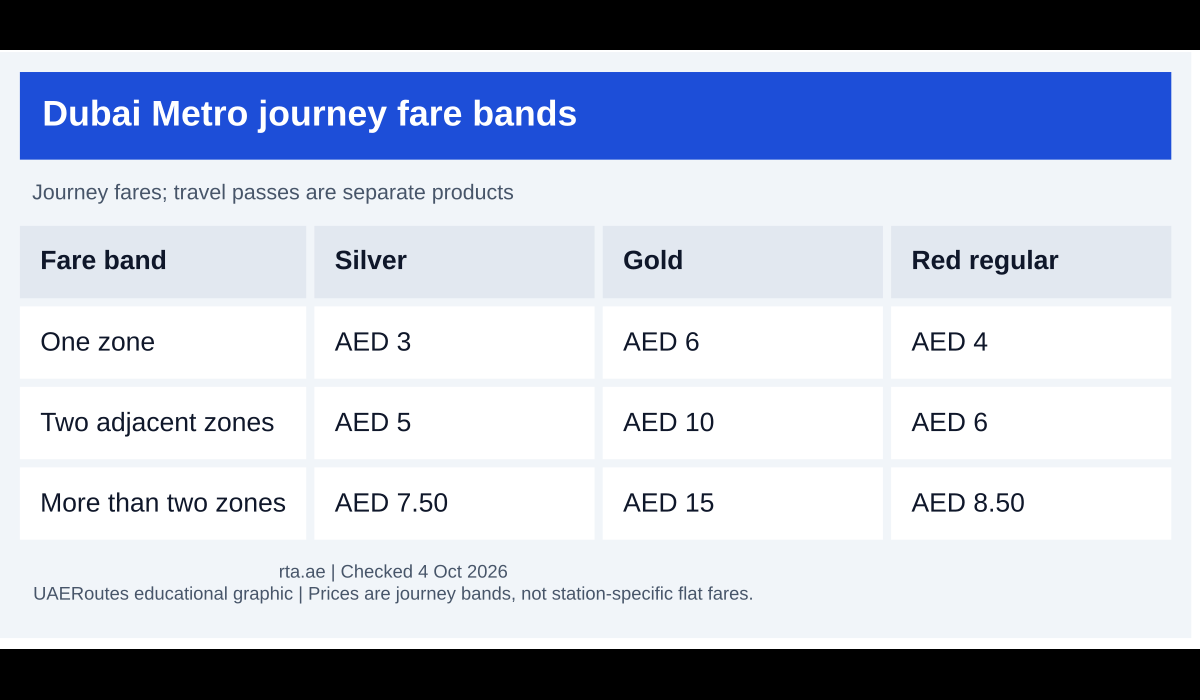
The table below shows RTA’s published fare bands checked on 4 October 2026. Silver and regular personal-card fares use the standard band, while Gold Class metro and tram travel has a higher fare. Red tickets have their own published prices, so their cost should not be confused with the Silver card fare.
| Fare band | Silver or regular personal card | Gold Class | Red ticket regular |
|---|---|---|---|
| Within one zone | AED 3 | AED 6 | AED 4 |
| Two adjacent zones | AED 5 | AED 10 | AED 6 |
| More than two zones | AED 7.50 | AED 15 | AED 8.50 |
Check the official nol fare page for the applicable fare before buying. The table describes published journey bands; it does not add the price of purchasing a new card or a separate transport product.
For example, a regular journey wholly within one fare zone uses the AED 3 band. A journey covering two adjacent zones uses AED 5, even if it involves a line change that stays within that journey’s fare conditions. Count the relevant zones and use the correct card column rather than adding a separate fare simply because you changed trains.
Transfers and tapping correctly
RTA’s fare rules include a transfer window, a maximum journey duration and a limit on transfers. The published rules specify 30 minutes between transfers, 180 minutes for the journey and up to three transfers. Check which services and ticket conditions apply when combining modes, since a separate product can follow different rules.
Tap in when starting and tap out when finishing a journey where the system requires it. This records the travel needed to calculate the fare. Keep your card accessible until you have passed the final reader instead of packing it at the bottom of a shopping bag before leaving the station.
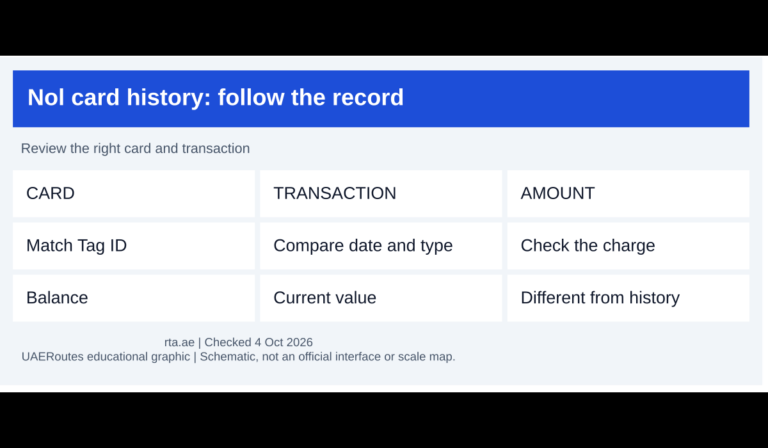
If the amount seems wrong, note the stations and times and review the nol transaction history guide. A missing check-out, a different class of travel or a journey outside the transfer conditions should be investigated using the actual record. Guessing from the remaining balance can hide a separate top-up or purchase.
Choose a pass for the zones you use
A travel pass covers its selected zone range for the permitted transport services and period. One-zone, two-zone and all-zone choices are different products. An all-zone pass can be useful for varied trips, but it may cost more than needed if your routine stays within a smaller area.
The nol unlimited all-zone pass guide compares the published durations and prices. Use your real journeys to compare a pass with pay-as-you-go travel. Count workdays, return rides and regular extra trips, then leave out days when you expect to walk, work from home or use a different transport service.
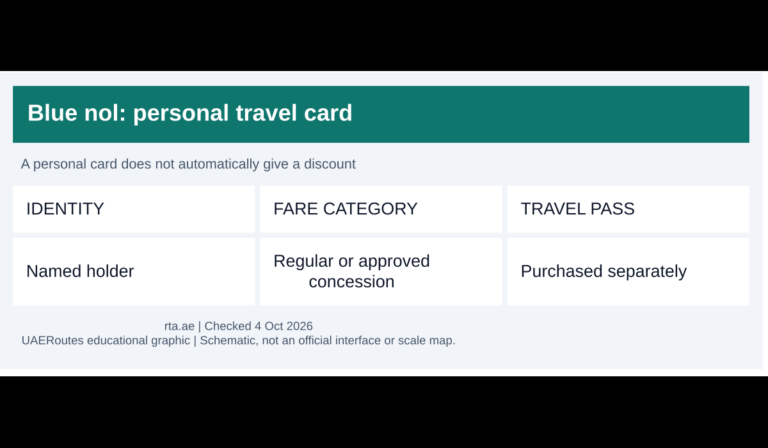
Eligible students should also review the student nol card guide. A concession depends on the approved card category and active eligibility, rather than being granted to every Blue card holder. The appropriate discounted fare or pass may change the comparison, so confirm the category before deciding.
Avoid these map and fare mistakes
Do not treat a future line on a project map as a service that runs today. Check the legend and use the operating network when planning an immediate trip. Similarly, do not assume all seven fare zones contain a metro station simply because the fare area is divided into seven parts.
Gold Class is a travel class, not a cheaper way to cover more zones. Confirm the card and cabin you use before boarding. An ordinary bus journey does not become Gold Class merely because the passenger carries a Gold card; check the mode’s actual fare conditions.
Final thoughts
Use the current map to find the right stations, check the zones covered and select the correct card column. With those pieces in place, fares and pass choices are easier to compare. Keep the official map available for the return trip, especially when it includes a change of line.
Featured Dubai Metro photograph by Daniel Zacatenco on Unsplash.


5 thoughts on “Dubai Metro Zones, Fares and Map Explained”